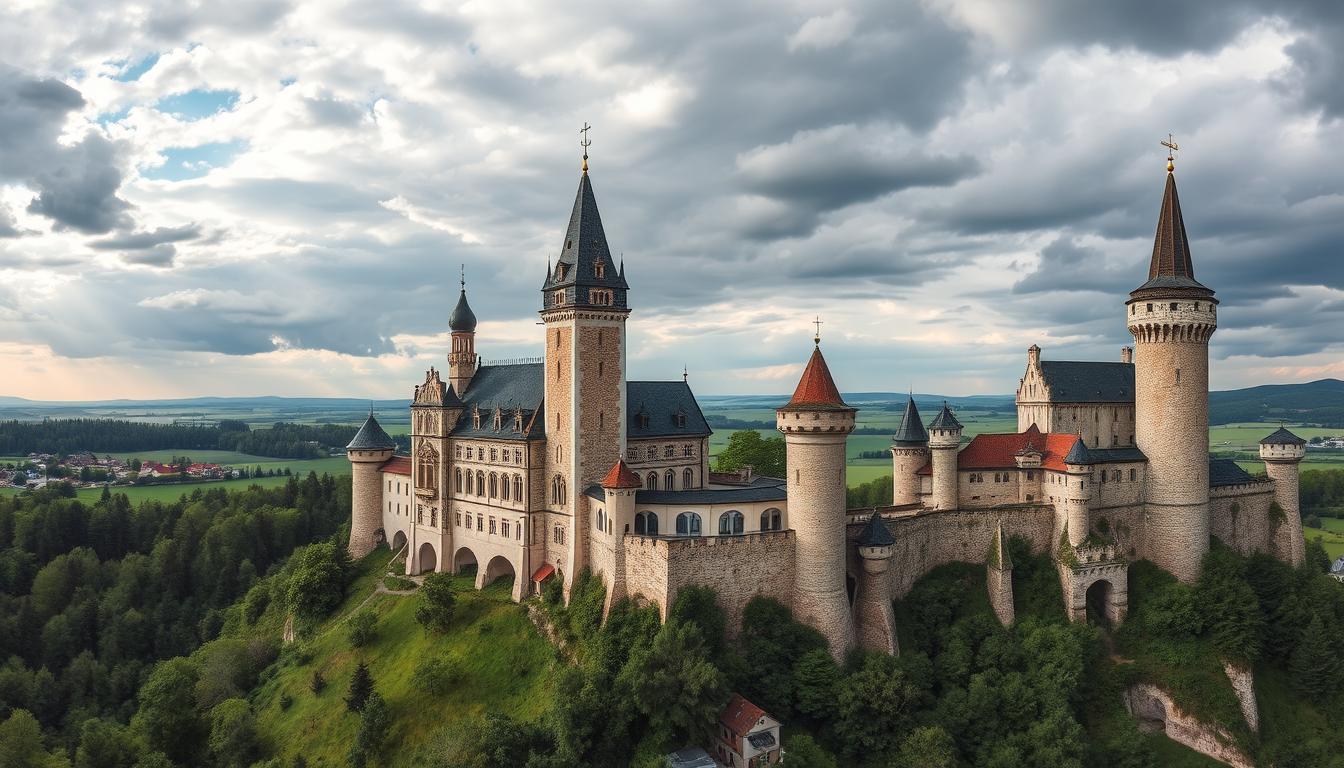
Poland is home to over 400 stunning Polish castles that echo the nation’s rich history and architectural beauty. Situated predominantly in the Dolnośląskie region, nearly a quarter of these historically significant structures can be found here. Each castle tells its unique story, from the medieval architecture of the Teutonic castles like the grand Malbork Castle, a UNESCO castle recognized for its size and historical importance, to the elegant Renaissance-Mannerist style of Zamek w Krasiczynie.
Among the best Polish castles, Wawel Castle stands out as a central symbol of Polish royalty, while the ruins of Zamek Krzyżtopór remind us of Poland’s ambitious past. Castles such as Zamek w Pieskowej Skale demonstrate how these fortresses transformed throughout the centuries, adding layers to Polish history. This section delves into the fascinating roles these castles played in defense, governance, and their ongoing appeal as cultural landmarks in the landscape of Polish history.
Examples of the Most Beautiful Castles
Poland is home to a variety of stunning Polish castles that showcase the country’s rich architectural heritage. One must-see is the magnificent Malbork Castle, often considered the largest brick fortress in the world. As a UNESCO World Heritage site, it exemplifies Teutonic castles with its impressive Gothic architecture and historical significance. Visitors to Malbork can explore its sprawling grounds and learn about its pivotal role in medieval history.
The Renaissance-style Castle in Krasiczyn offers a completely different perspective on Polish architectural design. Known for its unique combination of military fortifications and stunning aesthetics, this castle is truly an architectural gem. Its meticulous design reflects the artistic trends of the Renaissance period, enhancing its allure.
Another notable structure is the Castle in Łańcut, recognized for its picturesque park and breathtaking interiors. This castle stands out among Poland’s aristocratic residences, representing the opulence of the nobility while offering insights into the country’s past. Visitors often marvel at its exquisite decorations and beautifully maintained gardens.
Krzyżtopór Castle is another historical gem, famous for its innovative bastion design and significant history. Originally built in the 17th century, it tells the story of a turbulent past marked by various wars and ownership changes. Its unique architecture captivates those who appreciate both history and design.
Lastly, Książ Castle stands out not only for its grand architecture but for the many tales woven into its walls. Renowned for its stories of nobility and wartime drama, it is an essential stop for anyone exploring Poland’s unique castles. Each of these stunning castles illustrates the country’s rich architectural heritage, making Poland a treasure trove for history enthusiasts and architecture lovers alike.
What Events Are Organized in Castles
Castles in Poland serve as dynamic venues for a wide array of events, bringing history to life. Historical reenactments allow visitors to immerse themselves in the past, showcasing medieval battles, courtly life, and vibrant local festivals. These experiences provide thrilling insights into the cultural heritage events that enrich the landscape of Polish castles. Spectacular events like the “Castle Nights” feature themed evenings with music, dance, and storytelling aimed at celebrating the region’s rich traditions.
Family-friendly activities abound, making these historic sites accessible for everyone. Many castles host summer theaters, art exhibitions, and engaging workshops designed specifically for younger audiences. Such initiatives ensure that families can enjoy a fun-filled day that educates and entertains. Guided tours enhance the experience by offering detailed explorations into the castles’ histories, allowing participants to engage with knowledgeable historians.
This combination of living history and entertainment breathes new life into these revered structures, attracting both tourists and locals eager to connect with their shared heritage. By hosting a diverse range of activities, castles become not only repositories of history but also lively hubs of culture and enjoyment.
Trends in Historical Tourism
The landscape of historical tourism in Poland is evolving, with travelers increasingly seeking destinations that offer rich cultural experiences. As a result, the demand for immersive guided tours has surged, allowing visitors to delve deep into the stories and architectural details of iconic sites such as the Royal Castle in Warsaw and Bobolice Castle. This rising interest in cultural travel has created opportunities for local economies and enhanced the overall tourism appeal of landscapes dotted with ancient castles.
Adventure tourism is also on the rise, with travelers looking for unique experiences that blend history with activity. Engaging in explorations of medieval ruins or participating in vibrant medieval festivals enhances the allure of Poland’s scenic UNESCO sites. The Warmia-Masuria Province, home to remarkable sites from the era of the Teutonic Knights, attracts those eager to combine their historical passions with the thrill of outdoor adventures.
Moreover, there is a growing emphasis on family-friendly travel initiatives within historical tourism, ensuring that younger generations can also appreciate the rich narratives of Poland’s past. Educational programs held in castles aim to capture the imaginations of children, fostering a lifelong interest in history. With Poland’s wealth of preservedmilitary defense engineering sites and towns like those found in the Pomeranian Voivodeship, this trend of combining education with enjoyment bodes well for the future of travel in Poland, establishing it as a mecca for history enthusiasts and adventure seekers alike.